India’s Ministry of Defence (MoD) has entered into contracts cumulatively worth INR 1,577 crore (approximately US$165 million) for supply of loitering munitions for the Indian Army.
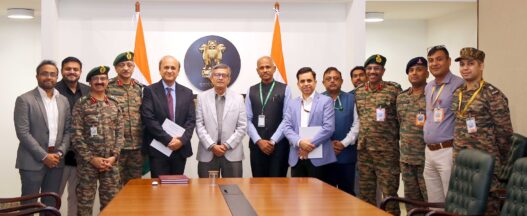
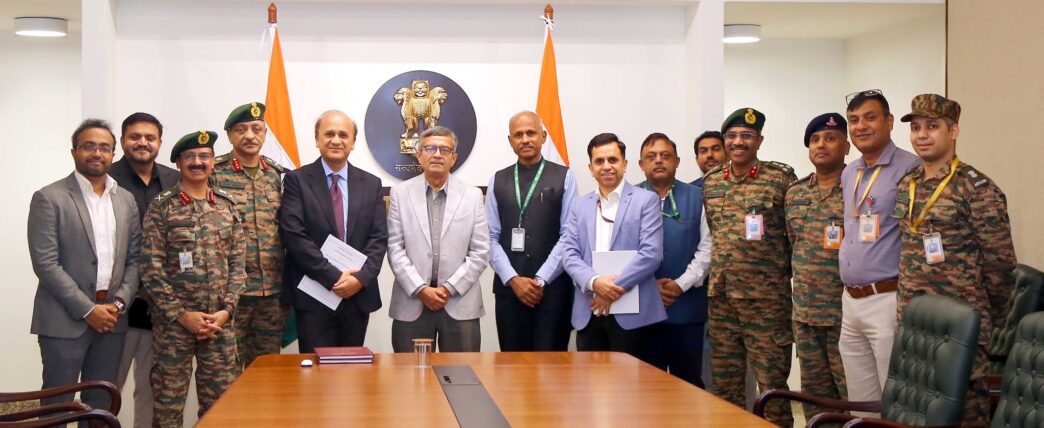
The contracts were signed on on 14 August, 2026 with Tata Advanced Systems Ltd (TASL) and NIBE Pvt Ltd.
The contracts awarded under the Buy (Indian) category through the Fast Track procedure will equip Indian Army Artillery Regiments with indigenously produced loitering munitions.
The MoD has not disclosed which systems will be supplied under the contracts.
TASL Advanced Loitering System
However, TASL has an indigenously designed and developed a loitering munition system called the Advanced Loitering System (ALS), while NIBE recently completed Indian Army technical trials with its Vayu Astra-1 loitering munition.
TASL’s ALS can be equipped with different types of warheads. The fully autonomous systrem requires minimum operator intervention for launch, flight and targeting. Its live Electro Optic / Infra-Red (EO/IR) feed capability and precise targeting algorithm allows the user to guide the munition as required.
NIBE Pvt Ltd Vayu Astra-1
NIBE announced in May 2026 that its ‘Vayu Astra-1’ loitering munition had successfully completed technical trials against an Indian Army Request for Proposal (RFP).
The Vayu Astra-1 is a locally assembled variant of Elbit Systems’ SkyStriker loitering munition.
During technical trials at the Pokhran Range, Rajasthan, the Vayu Astra-1 with a 10 kg warhead demonstrated an anti-personal strike on a target 100 km away. It achieved a Circular Error Probable (CEP)* of less than 1 metre in the demonstration.
An anti-armour night strike was also performed using the weapon’s IR camera wherein the target was struck with a 2-meter CEP. During this trial, control from Ground Control Station (GCS) was handed to a Forward Control Station located 70 km away.
During high-altitude flight trials in Uttarakhand, the system demonstrated its ability to attain altitudes in excess of 14,000 feet with flying times exceeding 90 minutes.
* Circular error probable (CEP) is a statistical parameter that is used to describe the accuracy of ballistic projectiles.
Related Coverage:
Pinaka Long Range Guided Rocket Tested at 60 Km Minimum Range
HAL Awards LCH Fuselage Production Contracts to Adani Defence, BEML